Chemical composition and in vitro nutritional value of forage cacti (Opuntia ficus- indica) silage with additives
DOI:
https://doi.org/10.56890/jpacd.v28i.629Keywords:
Alternative forages, forage cactus, homofermentative bacteria, non-protein nitrogenAbstract
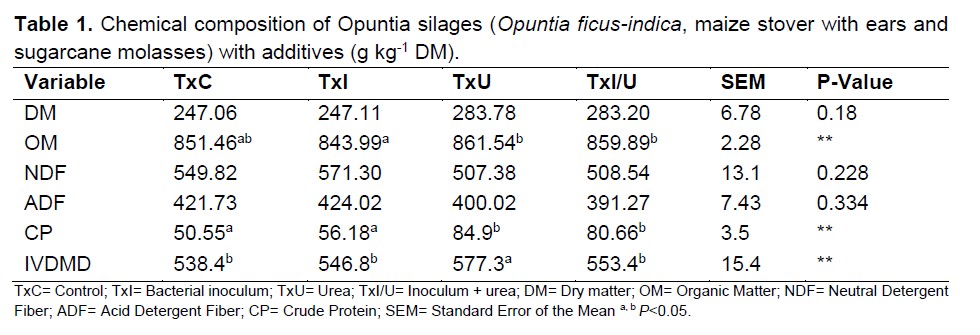
Possible effects of climate change, affecting rainfall patterns and longer dry spells make it necessary to research climate resilient forage alternatives for livestock feeding towards sustainable intensification, with good quality forages adapted to varied environments and hydric cycles. Forage Opuntia cactus may be a main component of diets for ruminants given its nutritional quality; and conserving Opuntia cactus as silage addresses the need to have forage year-round. Additives may enhance fermentation characteristics or the nutritional value of silage. There is a knowledge gap in the specialized literature on the effect of additives on the nutritional value of Opuntia silages. Therefore, the objective was to evaluate in laboratory microsilos the effect of adding a bacterial inoculant as source of homofermentative bacteria, or urea as a source of non-protein nitrogen, or the inclusion of both additives in the chemical composition and in vitro nutritive value of Opuntia silages. The treatments were: Control (TxC)= 70% forage Opuntia with 20% ground maize stover with ears and 10% sugarcane molasses; TxI= Control plus bacteria inoculum; TxU= Control plus 0.5% urea; and TxI/U= Control plus inoculum and urea. There were five microsilos per treatment in 4 L plastic buckets with lids that were opened after 28 days. Chemical composition of silages was determined in terms of dry matter (DM), organic matter (OM), neutral detergent fiber (NDF), acid detergent fiber (ADF), crude protein (CP), and in vitro digestibility of dry matter (IVDMD). Number and size of mold colonies, temperature and pH of silages were also determined. Treatments with urea (TxU and TxI/U) increased CP content (P<0.05) and IVDMD. There were no differences for number or size of mold colonies (P>0.05), but treatments with bacterial inoculum (TxI and TxI/U) showed lower pH (P<0.05). Results are valid, since experimental silos may have a more active fermentation compared to farm silos, microsilos are useful because results are like farm silos. In this experiment, results showed that Opuntia silages may be a forage option, and the addition of bacterial inoculum improved fermentation, and the addition of urea increased the CP content, that by also increasing IVDMD, may meet requirements for maintenance and moderate growth in cattle. It is concluded that Opuntia silages with 20% ground maize stover with ears and 10% of molasses (fresh basis) are a viable forage alternative for feeding ruminants, and the addition of bacterial inoculum and urea improves fermentation conditions and increases crude protein content.
Publication Facts
Reviewer profiles N/A
Author statements
Indexed in
- Editor & editorial board
- profiles
- Academic society
- Journal of the Professional Association for Cactus Development
- Publisher
- Professional Association for Cactus Development

To learn about these publication facts, click 
PF is maintained by the Public Knowledge Project