Field effectiveness of biorational insecticides against Dactylopius opuntiae (Cockerell) in commercial Opuntia ficus-indica (L.) Mill. production in Morelos, Mexico
DOI:
https://doi.org/10.56890/jpacd.v28i.642Keywords:
Integrated pest management, Opuntia ficus-indica, wild cochinealAbstract
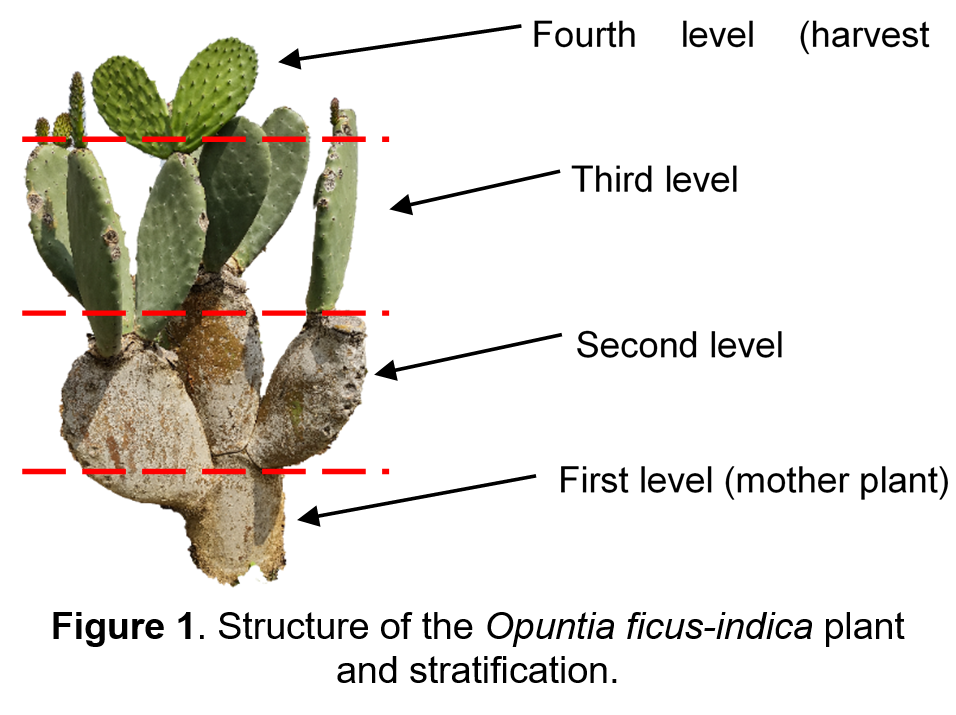
Mexico is the world’s leading producer and consumer of Opuntia ficus-indica. However, production of this crop is constantly affected by the wild cochineal (Dactylopius opuntiae Cockerell), which is the most economically important pest of prickly pear. The objective of this study was to evaluate the biological effectiveness of several biorational insecticides for controlling wild cochineal populations on nopal cactus and to reduce the use of conventional pesticides. The study was conducted in a seven-year-old commercial nopal plantation located in Tlalnepantla, Morelos, Mexico. Seven biorational insecticides each applied at two doses (low and high) were evaluated: Cinnacar®, Blinem®, Asphix®, Mass derrive, Prowet Ovi-Die®, Roma® soap + Bemix®, and potassium soap, in addition to a regional conventional control based on Malathion 1000 CE at two doses (low and high). The experimental design was a completely randomized design with four replicates per treatment. Applications were performed using a motorized sprayer. Results showed that potassium soap achieved >50% control in third-level cladodes and up to 49.2% on the fourth-level cladodes, even under high infestation pressure. Likewise, some products such as Roma soap, Prowet Ovi-Die, and Mass derrive may be effective against initial infestations of less than 30%, depending on the structural area of application. Furthermore, since female nymphs tend to migrate vertically to areas with lower cellulose content within the plant structure to insert their mouthparts and establish their sessile stage, it is important to maintain control of the mealybug on the third level; otherwise, the cladodes on the fourth level will also be affected. These results indicate that biorational insecticides are a viable and environmentally safe component of integrated pest management strategies for controlling wild cochineal in open-field production systems for nopal as a vegetable crop.
Publication Facts
Reviewer profiles N/A
Author statements
Indexed in
- Editor & editorial board
- profiles
- Academic society
- Journal of the Professional Association for Cactus Development
- Publisher
- Professional Association for Cactus Development

To learn about these publication facts, click 
PF is maintained by the Public Knowledge Project